
Electricity Forum Intelligent Power Today Magazine Arc Flash Clothing

Disaster & Recovery


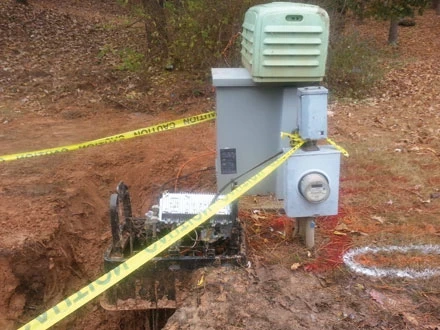
Storm Outage Restoration Congress comes to Georgia

Cairo Vanegas, the superintendent Of Electric T&D for Fort Pierce Utilities Authority will speaking at the Storm Outage Restoration Congress on December 11th and 12th in Atlanta, Georgia on "Examining Methods For Reducing Damage To Overhead Infrastructure Through Armless Construction And Other...

Wire and Cable


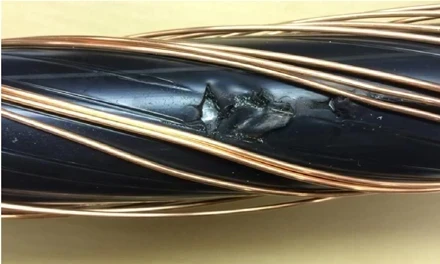
Utility Proactively Tests Underground Cable

Distribution companies are continually looking for ways to improve system reliability, all while conserving capital investments and operational costs. With an aging infrastructure, one of the main issues that utilities face is a way to assess the actual condition of their capital assets. With...

Overhead Distribution


Building a better world of smart structures on the smart grid

It is a truth universally acknowledged that billions of people around the world live in poverty. But does it have to be that way? Today’s technological progress means that tomorrow we will be able to produce more, more efficiently – lifting people above the breadline with accelerated...

Conductors & Materials


Solving Underground Cable Problems with Partial Discharge Testing

How to prevent failure with partial discharge testing BY HENNING OETJEN, Megger Partial discharge (PD) measurements are increasingly used as a reliable and non-destructive diagnostic method to detect weak spots in the insulation of underground cables. Routinely, partial discharge measurements are...

Infrastructure & Technologies


Underground Distribution


Underground Distribution Sensors

Exploring the benefits of wide-area monitoring BY TED MYERS, On-Ramp Wireless The average citizen and business experiences over 120 minutes of electricity outage duration a year. This has a significant societal impact costing 10s to hundreds of billions of dollars annually. Furthermore, the measure...

Overhead T&D

ACSR and ACCC

The Evolution / Revolution of Overhead Conductors... and why it matters

Brief Background:

In the early 1900’s Aluminum Conductor Steel Reinforced (ACSR) conductor was developed to replace copper wires, due to the war effort when copper was needed for munitions. In the 1970’s growing demand for electricity inspired the development of higher capacity Aluminum Conductor Steel Reinforced (ACSS) conductor. The ACSS conductor became known as the first “High-Temperature, Low-Sag” (HTLS) conductor. The design used the same steel core as ACSR (with improved galvanized coatings) and fully...

Overhead T&D Articles