Asset Management & Maintenance
A Grid With Multiple Applications
Critical Infrastructure Communications
Asset Management & Maintenance
Trends in SCADA Security
The importance of up-to-date critical system monitoring
BY MARLEE ROSEN, Rosen Associates
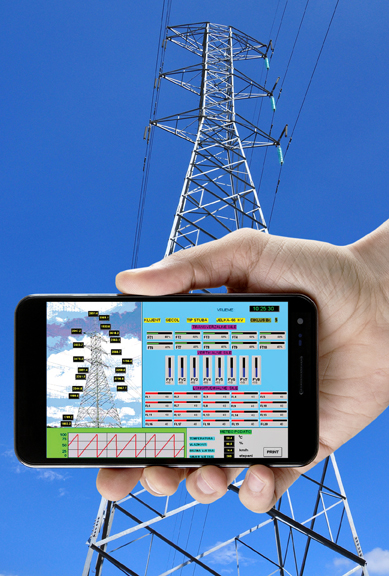
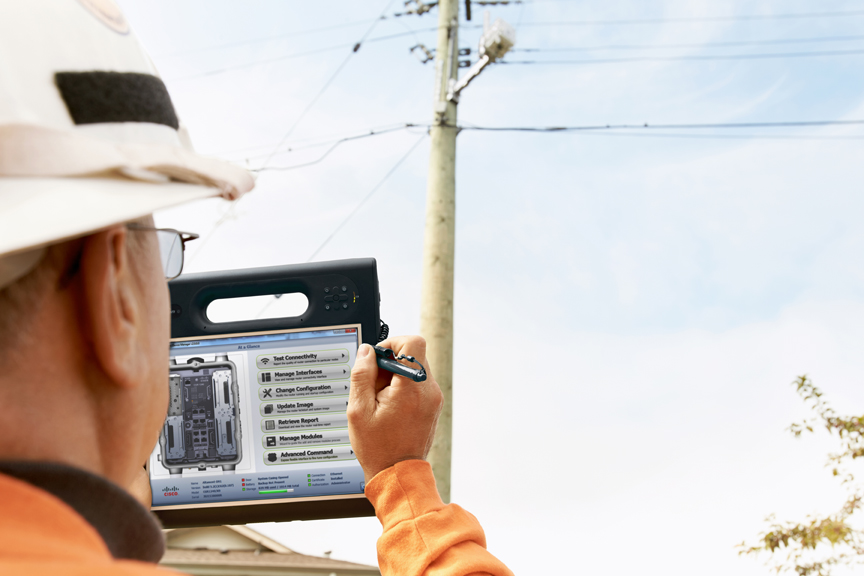
Supervisory control and data acquisition (SCADA) networks contain computers and applications that perform critical capabilities in delivering essential services and commodities (for example, electricity, natural gas, water, waste treatment, wind farms, transportation) to consumers. As such, they are part of America’s critical infrastructure and require protection from a variety of threats that exist in cyber space and even more commonly today, the mentality that “if it isn’t broken then don’t fix it”.
To optimize the collection and analysis of the data and control of equipment such as pumps and valves from remote locations, SCADA networks provide great efficiency and are widely used but many have been set up roughly 15 years ago and left to run without any further concern for product updates or enhancements.
MITIGATE RISK
These legacy SCADAs present a tremendous security risk. SCADAs were initially designed to maximize functionality and automate processes, product updates and new revisions. However, SCADA companies merged, ceased to exist or evolved more into manufacturing execution systems (MES). Also, tremendous changes have occurred in the automation industry that have left multitudes of outdated SCADAs in the field. As a result,...
Related Articles
Critical Infrastructure Communications
Using technology to improve response and recovery BY TOM BERGER, Mutualink The electric utility industry has an outstanding performance record of providing reliable power to public agencies, private enterprises, and the general public for over 100 years. However, when outages occur due to...
Hardening the Power Grid
How to improve reliability by hardening the power grid BY BO ZENG, WEI YUAN & LONG ZHAO, University of South Florida North America relies heavily on its interconnected power grid. Throughout its history, the grid has provided years of reliable electricity to 300 million people to power home...
Interoperability for the Smart Grid
Standards are just the beginning BY RICK GEIGER, Cisco Systems The aging electrical infrastructure and utility industry is undergoing its greatest transition in a generation. Grid modernization is already having a significant impact on how the energy industry operates. As with the adoption of any...
Unlocking More Value from Wind Energy Through Smart Monitoring
As the global demand for renewable energy intensifies, wind farms are emerging as pivotal players in the transition to sustainable power sources. In 2023, the wind industry added a remarkable 117 gigawatts (GW) of global capacity, underscoring its growing significance in the energy landscape....
Smart Substations and Their Role in the Evolving Smart Grid
The power industry is undergoing a profound transformation driven by grid modernization, renewable integration, and increasing demands for resilience and efficiency. At the heart of this evolution lies the smart substation—a next-generation facility equipped with advanced sensors, digital...
Unlocking More Value from Wind Energy Through Smart Monitoring
As the global demand for renewable energy intensifies, wind farms are emerging as pivotal players in the transition to sustainable power sources. In 2023, the wind industry added a remarkable 117 gigawatts (GW) of global capacity, underscoring its growing significance in the energy landscape....
FERC Complaint Targets Duke, PJM Transmission Planning
A coalition of large energy consumers and ratepayer advocates has filed a complaint with the Federal Energy Regulatory Commission (FERC), urging the agency to prohibit transmission owners from independently planning "local" transmission projects exceeding 100 kilovolts (kV). The coalition argues...
Advanced Sensor Technologies for Intelligent Transformers and Substations
In the evolving landscape of power grid management, integrating advanced sensor technologies in intelligent transformers and substations is revolutionizing monitoring and control. These sensors provide real-time data collection and analysis, significantly improving asset management and fault...
Smart Transformers: Enhancing Grid Efficiency and Reliability

The evolving demands of modern power grids necessitate the adoption of advanced technologies that can provide enhanced efficiency, reliability, and flexibility. Smart transformers are at the forefront of this technological revolution, offering a range of capabilities that significantly improve the...
The End of the Road for Transmission Incentives
In a significant shift, the Federal Energy Regulatory Commission (FERC) has decided to abandon its transmission incentives policy, particularly the construction work in progress (CWIP) incentives. This decision marks a pivotal change in how transmission projects are financed and regulated,...