
Optimizing Distribution Reliability Through Recloser Testing
CSA Z462 Arc Flash Training – Electrical Safety Compliance Course
Our customized live online or in‑person group training can be delivered to your staff at your location.

- Live Online
- 6 hours Instructor-led
- Group Training Available
Reclosers play an important role in distribution system reliability by detecting fault conditions, interrupting current, and automatically restoring power when a fault is temporary. Modern recloser controls can include overcurrent protection, automatic reclosing, voltage and frequency protection, cold load pickup, sequence coordination, communications, and other functions.
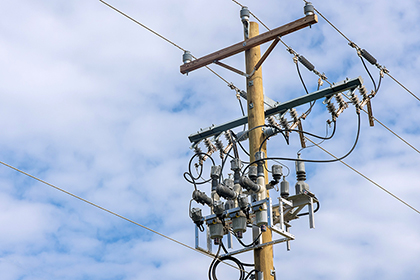
Because of these capabilities, testing a recloser involves much more than simply verifying that it opens and closes. A typical recloser system includes the interrupter or “upper,” current and voltage sensors, control cable, and controller. Testing should consider how these components work together to measure system conditions, apply the programmed protection logic, and issue the appropriate trip and close commands.
Recloser testing can generally be approached at three levels: primary injection testing, control testing, and system testing. Primary injection provides one of the most complete tests because current is injected through the primary circuit, allowing the recloser upper, current sensors, control cable, controller, and trip circuit to be evaluated together. However, primary injection can be difficult to perform in the field because the recloser upper is typically installed high on the pole, making access and test connections challenging. For this reason, primary injection testing is commonly performed in the shop before the recloser is installed. Depending on the application, testing can be performed single-phase or three-phase.
Sign Up for Electricity Forum’s Newsletter
Stay informed with our FREE Newsletter — get the latest news, breakthrough technologies, and expert insights, delivered straight to your inbox.
Read the full article at:
https://online.electricity-today.com/electricity-today/q3-2026/