
Cable Testing Comes of Age - One Cycle at a Time
CSA Z462 Arc Flash Training – Electrical Safety Compliance Course
Our customized live online or in‑person group training can be delivered to your staff at your location.

- Live Online
- 6 hours Instructor-led
- Group Training Available
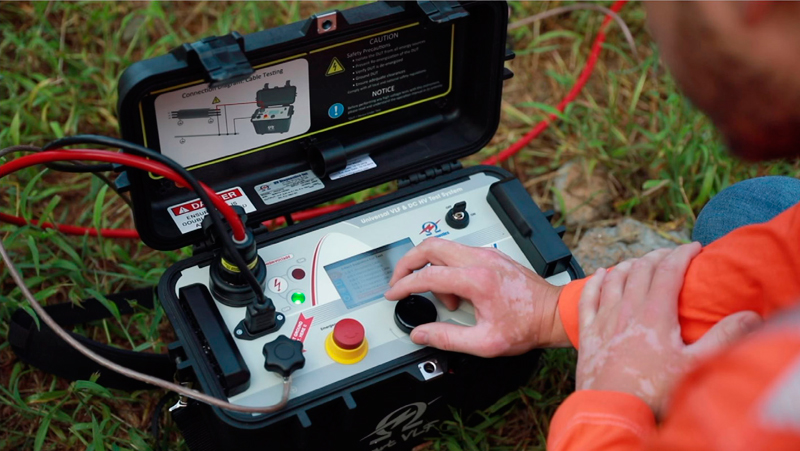
Field Testing of MV and HV cables has come a long way in recent decades. Gone are the days of old, when the traditional DC (Direct Voltage/Current) hipot was the recommended method for testing these modern cables that form the critical backbone of the distribution electrical power network. Extensive research, often rooted in the hard lessons learned through negative experiences in the field, has brought about changes to and improvements in the approaches and methods used when testing MV and HV cables.
The traditional high voltage “DC Hipot” and/or the routine insulation resistance measurement may still be a viable and useful technique for testing various types of electrical apparatus. However, when it comes to shielded MV and HV cables, this approach has been found to be seriously lacking and, in some cases, potentially damaging to the cables themselves. The latest IEEE400 clearly states that high voltage DC should not be used on extruded cables. Critically significant research around the world and focused studies like the CDFI project led by the National Electric Energy Testing Research and Applications Center (NEETRAC) at Georgia Tech has allowed International Standard bodies, such as the IEEE, to lead the way in prescribing better testing and diagnostic methods and guidelines for detecting abnormalities in MV and HV cables and/or their accessories.
AC (Alternating Voltage/Current) has effectively replaced the DC method for testing these cables. While technically beneficial to the test engineer in evaluating the true condition of these cables, this change also introduced some practical challenges to the test equipment and users involved. This is mainly because shielded MV and HV Cables are effectively very large capacitors, capable of storing large amounts of electrical charge – their capacitances getting larger with the length of the cable. Energizing the cable’s capacitor, while relatively easy with DC, is not as simple with AC due to the excessive and continuous reactive power demands AC requires. These power demands increase with cable length, frequency of AC and applied voltage.
Sign Up for Electricity Forum’s Newsletter
Stay informed with our FREE Newsletter — get the latest news, breakthrough technologies, and expert insights, delivered straight to your inbox.