Cybersecurity & Privacy
Zero-Trust Substations: How CIP Is Shifting from Perimeter Defense to Continuous Vendor and Supply-Chain Risk Management
Trends in SCADA Security
Cybersecurity & Privacy

Transmission Planning for Grid Security
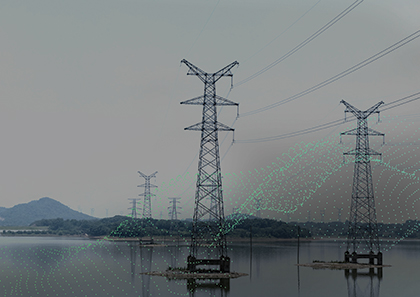
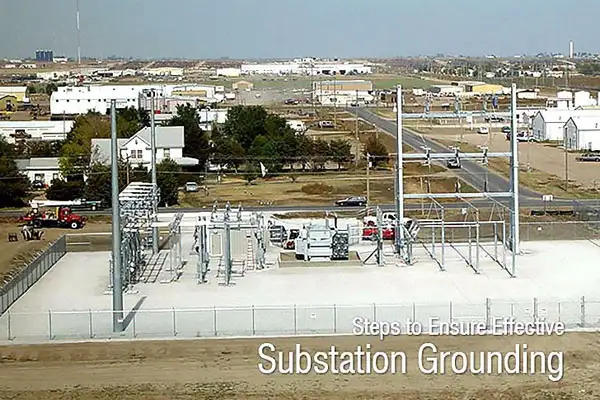
Recent physical attacks on substations have heightened the industry’s awareness of the necessity for physical security of critical facilities on the bulk power system. The goal of the North American Electric Reliability Corporation (NERC) Critical Infrastructure Protection (CIP) reliability standards is to identify and protect the physical security and cybersecurity of critical electricity infrastructure of North America.
With the Federal Energy Regulatory Commission (FERC) providing conditional approval of the North American Electric Reliability Corporation’s...
Related Articles
Trends in SCADA Security
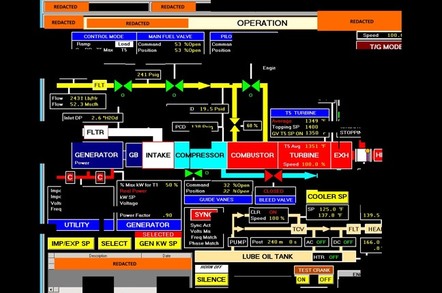
The importance of up-to-date critical system monitoring BY MARLEE ROSEN, Rosen Associates Supervisory control and data acquisition (SCADA) networks contain computers and applications that perform critical capabilities in delivering essential services and commodities (for example, electricity,...
Adopting Smart Grid Standards
Utilize industry guidelines for modern and future technologies BY W. CHARLTON ADAMS JR., IEEE Standards Association (IEEE-SA), Huawei Technologies A vision is coalescing worldwide of people ubiquitously connected across smart cities, smart buildings, smart cars and, perhaps, even through sensors on...
Grids Become Highly Vulnerable
Increasingly violent weather, probably caused by global warming, is increasingly taking down electricity distribution lines and poles and cyberattacks are increasingly taking out electricity, apparently just as trials for major terrorism of this sort. Little wonder that the price of grid...
FERC Proposes Ride-Through Standards for Renewables
The Federal Energy Regulatory Commission (FERC) is seeking public input on proposed "ride-through" reliability standards for inverter-based resources (IBRs), including wind, solar, and battery systems. These standards aim to ensure that IBRs can maintain operation during grid disturbances, such as...
Zero-Trust Substations: How CIP Is Shifting from Perimeter Defense to Continuous Vendor and Supply-Chain Risk Management
Utilities are rethinking cybersecurity. The zero-trust model replaces perimeter defense with continuous verification—of every device, vendor, and data path—across the substation and supply chain. The End of Perimeter Thinking For decades, substation cybersecurity meant building walls:...
FERC Complaint Targets Duke, PJM Transmission Planning
A coalition of large energy consumers and ratepayer advocates has filed a complaint with the Federal Energy Regulatory Commission (FERC), urging the agency to prohibit transmission owners from independently planning "local" transmission projects exceeding 100 kilovolts (kV). The coalition argues...
FERC Proposes Ride-Through Standards for Renewables
The Federal Energy Regulatory Commission (FERC) is seeking public input on proposed "ride-through" reliability standards for inverter-based resources (IBRs), including wind, solar, and battery systems. These standards aim to ensure that IBRs can maintain operation during grid disturbances, such as...
Virtual Power Plants (Vpp) And Smart Grids: Integrating Renewable Energy For A Sustainable Future
The rapid shift toward renewable energy resources (RERs) has placed significant demands on traditional power systems. To address these challenges, modern energy infrastructure is evolving into smart grids, leveraging advanced technologies like Virtual Power Plants (VPPs) to enhance grid...
North Carolina Town Sues Duke Energy for Climate Fraud
A small town in North Carolina has filed a lawsuit against Duke Energy, one of the largest utility companies in the United States, alleging that the company has been deceptive in its efforts to downplay the environmental impact of its operations. The lawsuit, filed by the town of Smithfield, claims...
FERC Approves Interconnection for Talen Energy, Amazon Data Center
In a significant move that underscores the growing demand for reliable and sustainable energy to power the expanding digital infrastructure, the Federal Energy Regulatory Commission (FERC) has approved an interconnection agreement between Talen Energy, Amazon Web Services (AWS), and Exelon. This...