
AI Integration in Transformer Oil Diagnostics: A New Era for Dissolved Gas Analysis

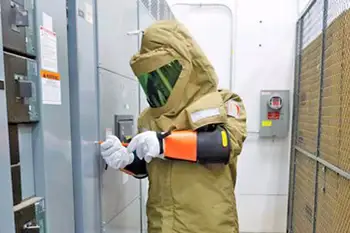
CSA Z462 Arc Flash Training – Electrical Safety Compliance Course
Our customized live online or in‑person group training can be delivered to your staff at your location.
- Live Online
- 6 hours Instructor-led
- Group Training Available
Transformer oil is more than an insulating and cooling medium. It is also a detailed record of what is happening inside the tank. When a transformer experiences overheating, arcing, or partial discharge, the oil and paper insulation break down and release gases and byproducts that dissolve into the oil. For decades, engineers have analyzed these indicators to assess transformer health. Artificial intelligence is now making that analysis faster, more consistent, and more predictive.
The Foundation: Dissolved Gas Analysis
Dissolved gas analysis (DGA) measures key fault gases, including hydrogen, methane, ethane, ethylene, acetylene, carbon monoxide, and carbon dioxide. Each fault type produces a characteristic pattern. Partial discharge generates mainly hydrogen, low-temperature thermal faults produce methane and ethane, high-temperature overheating drives ethylene, and arcing produces acetylene. Carbon monoxide and carbon dioxide point to degradation of cellulose paper insulation.
Engineers interpret these patterns using established methods, including the Duval Triangle and Duval Pentagon, Rogers ratios, and the key gas method, guided by standards such as IEEE C57.104 and IEC 60599. The 2019 revision of IEEE C57.104 placed greater emphasis on gas generation rates and on statistical norms, reflecting the reality that trends often matter more than single readings.
Read the full article at:
https://online.electricity-today.com/electricity-today/q3-2026/