
Human Factors on the Line: Fatigue, Complacency, and Decision Making at Height
NFPA 70E Training
Our customized live online or in‑person group training can be delivered to your staff at your location.

- Live Online
- 6 hours Instructor-led
- Group Training Available
How Real Incidents Actually Take Shape
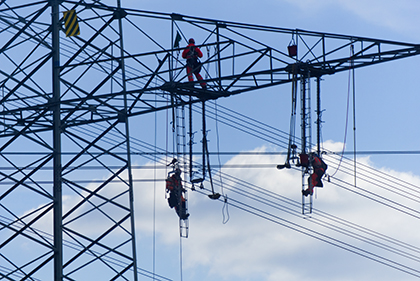
Most serious line incidents do not begin with a dramatic failure or an obvious violation of rules. They begin quietly, through a sequence of small decisions made under ordinary pressure. A grip adjusted instead of reset. A stance accepted instead of corrected. A task continued rather than paused. None of these choices feel unsafe in the moment. In fact, they often feel efficient, reasonable, and consistent with experience. Yet when work is performed at height, these small decisions compound quickly, narrowing margins that cannot be recovered once something goes wrong.
Understanding how those decisions are made is critical to understanding why experienced linemen are still getting hurt.
Fatigue Is More Than Hours Worked
Fatigue is often discussed as a function of shift length, but linemen know it runs much deeper than the clock. Cognitive fatigue builds through constant problem-solving. Crews switch between tasks, respond to changing system conditions, coordinate with other crews, and adapt to unfamiliar circuits and access points. Each adjustment draws on attention and judgment, even when the body feels capable. Night work intensifies these effects. Depth perception suffers. Visual cues flatten. Reaction time slows just enough to matter. Weather compounds the strain. Heat drains focus. Cold reduces dexterity. Wind alters balance. None of these factors stop work, but all of them quietly tax decision-making capacity. The most dangerous aspect of fatigue is that it does not announce itself. Judgment often feels intact long after performance has begun to degrade. Decisions still feel sound, even as the margin for error shrinks.
Sign Up for Electricity Forum’s Newsletter
Stay informed with our FREE Newsletter — get the latest news, breakthrough technologies, and expert insights, delivered straight to your inbox.
Read the full article at:
https://online.electricity-