Fall Protection
5 Ways to Improve Bucket-to-Ground Communication
How to Prevent Struck-By and Backover Incidents
Fall Protection
Breaking Down OSHA's Revised Fall Protection Standards for Utility Workers
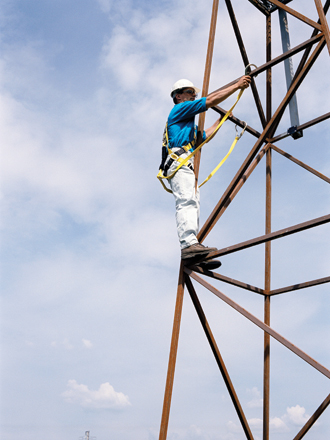
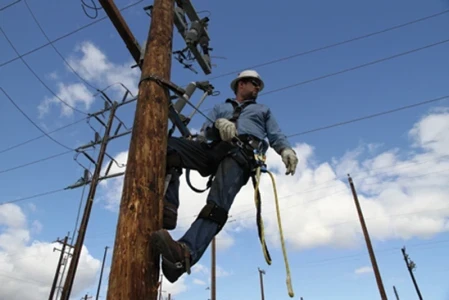
Ineffective or missing fall protection has been OSHA’s most-cited violation every year since 2011, and falls are the leading cause of death in the construction industry. Year after year, fall protection remains a key concern for employers throughout the United States. Not just that, but electrical workers routinely face hazards in the form of high-voltage equipment, dangerous heights, and extreme weather conditions.
OSHA recognizes these dangers and in 2014, updated some of its fall protection regulations to keep employees safe while working at heights. 29 CFR §1926.954 covers PPE requirements, including fall protection, and 29 CFR §1910.269 covers electric power generation, transmission and distribution work. The agency hadn’t updated its rules since 1972 and sought to align them more closely with general industry standards.
Related Articles
How to Prevent Struck-By and Backover Incidents
Struck-by, struck-against and back-over incidents are far too common: 421 Hudson St., Manhattan, NYC: Construction worker killed by scaffolding plank. Woods Hole Golf Club, Falmouth, MA: Construction worker injured in back-over accident. Interstate 440-East, Raleigh, NC: DOT workers seriously...
Hand Safety - Protective Gloves
Rubber insulating gloves are among the most important articles of personal protection for electrical workers. To be effective, the gloves must incorporate high dielectric and physical strength, along with flexibility and durability. For superior performance they should meet and/or exceed the...
Testing Conditions and Guidelines for Personal Fall Protection Systems
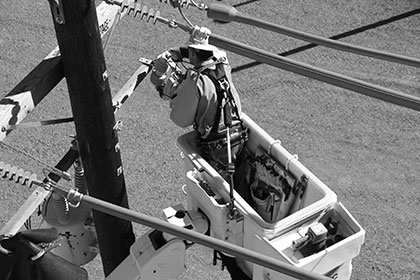
1. PERSONAL FALL ARREST SYSTEMS (A) GENERAL TEST CONDITIONS Lifelines, lanyards, and deceleration devices should be attached to an anchorage and connected to the body-belt or body harness in the same manner as they would be when used to protect employees, except that lanyards should be tested...
12 Tips to Protect Against Common Lineworker Safety Hazards
Lineworkers face numerous risks daily, from respiratory ailments to electrical hazards. These dangers can result in severe injuries, low blood pressure, bleeding, and vomiting. However, by adhering to established safety protocols, contractors and employers can significantly reduce the likelihood of...
FERC Complaint Targets Duke, PJM Transmission Planning
A coalition of large energy consumers and ratepayer advocates has filed a complaint with the Federal Energy Regulatory Commission (FERC), urging the agency to prohibit transmission owners from independently planning "local" transmission projects exceeding 100 kilovolts (kV). The coalition argues...
12 Tips to Protect Against Common Lineworker Safety Hazards
Lineworkers face numerous risks daily, from respiratory ailments to electrical hazards. These dangers can result in severe injuries, low blood pressure, bleeding, and vomiting. However, by adhering to established safety protocols, contractors and employers can significantly reduce the likelihood of...
FERC Rejects PJM Transmission Planning Change
The Federal Energy Regulatory Commission (FERC) has rejected a proposal from PJM Interconnection, one of the United States' largest regional transmission organizations, to alter its transmission planning protocol. The decision represents a significant victory for state regulators who had expressed...
FERC Approves Interconnection for Talen Energy, Amazon Data Center
In a significant move that underscores the growing demand for reliable and sustainable energy to power the expanding digital infrastructure, the Federal Energy Regulatory Commission (FERC) has approved an interconnection agreement between Talen Energy, Amazon Web Services (AWS), and Exelon. This...
Fall Protection: The ABCs of Connecting Devices

A personal fall protection arrest system (PFAS) is comprised of three vital components: an anchorage, body wear (full-body harnesses), and a connecting device (a shock-absorbing lanyard or self-retracting lifeline). The safety of at-height workers depends on these three components, and each one...
Lineman Safety during a Wildfire
If you wanted to create a recipe for disaster, the beginning of the 2021 wildfire season would be a good place to start. Nearly 90% of the western U.S. is suffering through extreme drought. The snowpack set new low levels there as well. A record-breaking heatwave steamrolled the Pacific Northwest...