
Electrical Transformers
Advancements in Dissolved Gas Analysis: Accounting for Gas Loss
New Complex Windings Configuration Set Up In Magnetic Programs
Electrical Transformers
Advancements in Dissolved Gas Analysis: NEI & Gassing Events
One of the most important steps when looking at DGA data is to decide whether the data support the existence of a fault that is actively breaking down the insulation before you try to use a triangle, pentagon, or gas ratio method to identify a fault type. Otherwise, you are diagnosing random measurement noise, not the transformer. Conventional methods assign limits to each of the gases to detect and assess abnormal gas formation. Formerly it...
Related Articles
New Complex Windings Configuration Set Up In Magnetic Programs
Read the full article in our Transformer Technologies Special Edition
Transformer Diagnostic Testing
Transformer diagnostic testing: standards to diagnose equipment with Sweep Frequency Response analysis BY VOLNEY NARANJO, Megger Sweep Frequency Response Analysis (SFRA) has become a powerful tool in advanced power transformer assessments and probably one of the main and first tools used to...
RMS Energy Responds to the Changing Engineering Needs of Customers
Today’s electrical infrastructure in the United States might have been viewed as a work of science fiction when the first commercial power grid was conceived and built in New York’s lower Manhattan in the 1880s. But it didn’t take long for fiction to become fact. Thomas...
The importance of risk assessment and the role of Reliability-based DGA
By Chuck Hoeppner, Delta-X Research It’s often said that you can’t manage what you can’t measure. But how does one manage risk in the mission-critical, 24x7 world of energy utilities? It’s a challenging undertaking, anticipating future demands and ensuring the reliability...
The Role of Transformer Oil Alternatives in Improving Safety and Environmental Sustainability
The Growing Need for Safer and Greener Transformer Oils Transformer oil plays a vital role in the operation and longevity of power transformers, providing insulation, cooling, and arc suppression. Traditionally, mineral oil has been the industry standard due to its effective dielectric properties...
Enhancing Transformer Resilience: Fire Barriers and Safety Measures in Modern Substations
The Growing Concern of Transformer Fire Risks An Electrical Substation Transformer is a critical component of modern substations, playing a vital role in the transmission and distribution of electricity. However, due to the high-voltage operations, flammable insulation materials, and exposure...

Navigating the Transformer Supply Crunch: Strategies for Utilities Amidst Global Shortages
The Growing Transformer Supply Crisis The global transformer supply chain is facing unprecedented challenges, with utilities worldwide struggling to procure essential equipment due to material shortages, manufacturing delays, and logistical constraints. Transformers are the backbone of electrical...
MITIGATING TRANSFORMER FAILURES: ADVANCED MONITORING AND MAINTENANCE STRATEGIES
Power transformers are critical assets in electrical transmission and distribution networks. Their failure can lead to widespread outages, costly downtime, and potential safety hazards. As transformers age and operate under varying electrical and environmental stresses, degradation becomes...
Transmission Construction Industry Leader Retires and Sells at Absolute Auction!
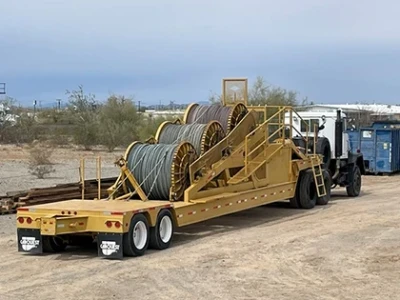
S.E., Inc. has been providing the very best in Transmission Powerline Construction for over (40) years throughout the Western United States. Brothers Mark, Steve, David, and Craig Sorenson have decided to retire and pursue other interests. Everything in the auction is owned by S.E., Inc. and will...
Understanding Bushing Failure Modes and Monitoring for Optimal Transformer Health
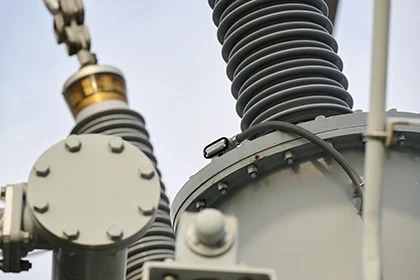
Monitoring the health of bushings is vital for ensuring the reliability of transformers, especially in high-stakes environments like power grids and industrial facilities. Bushings, critical components of transformers, are prone to various failure modes that can lead to operational inefficiencies...