Substation Automation
FERC Complaint Targets Duke, PJM Transmission Planning
Substation Automation Standard
Substation Automation

Substation Architecture Protection
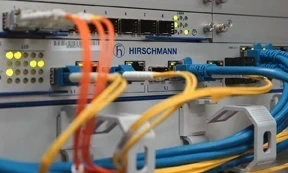
Solving common mistakes in communications cabling for electrical utilities
BY FRANK KODITEK, Belden Inc.
In the energy industry, there are numerous types of cables in use for a wide variety of applications, from transporting high-voltage current for miles to providing power and data connectivity within and among substations and to and from control centers. For the purposes of this article, we will be looking at the communications cables that are the veins and arteries of...
Related Articles
Substation Automation Standard
Reducing engineering costs using IEC 61850 BY ADAM GAUCI, Schneider Electric As substation automation is moving towards software environments based on the International Electrotechnical Commission’s substation automation standard, IEC 61850: “Power Utility Automation”, the engineering process...
Grid-Scale Battery Storage Systems and Their Impact on Substation Operations
The transition to renewable energy is reshaping the power landscape, with grid-scale battery storage systems playing a pivotal role in this transformation. These systems are crucial for balancing supply and demand, particularly at the substation level, where they enhance grid stability and...
Transmission Planning for Grid Security
Recent physical attacks on substations have heightened the industry’s awareness of the necessity for physical security of critical facilities on the bulk power system. The goal of the North American Electric Reliability Corporation (NERC) Critical Infrastructure Protection (CIP) reliability...
SUBSTATION AUTOMATION AND INTEGRATION PROGRAMS
Newton-Evans Research Company, Inc. of Ellicott City, MD is preparing to publish market research findings from Volume 1 of a four-volume study, “The World Market for Substation Automation and Integration Programs in Electric Utilities: 2017-2020.” Volume 1 of this Substation Automation...
Smart Substations and Their Role in the Evolving Smart Grid
The power industry is undergoing a profound transformation driven by grid modernization, renewable integration, and increasing demands for resilience and efficiency. At the heart of this evolution lies the smart substation—a next-generation facility equipped with advanced sensors, digital...
FERC Complaint Targets Duke, PJM Transmission Planning
A coalition of large energy consumers and ratepayer advocates has filed a complaint with the Federal Energy Regulatory Commission (FERC), urging the agency to prohibit transmission owners from independently planning "local" transmission projects exceeding 100 kilovolts (kV). The coalition argues...
The Role of Renewable Energy in the Smart Grid: Transforming Power Generation, Transmission, and Distribution
The integration of renewable energy sources (RES) into smart grid systems represents a fundamental shift in how energy is generated, managed, and consumed. This transformation is vital for modernizing energy infrastructure, enhancing grid reliability, and fostering sustainability. The shift from a...
FERC Conference Highlights Challenges in Resource Adequacy
The Federal Energy Regulatory Commission (FERC) recently hosted the Co-Located Load Conference, a significant event that focused on resource adequacy, energy reliability, and the challenges of ensuring sufficient electricity supply amidst changing grid dynamics. As the energy landscape continues to...
FERC Approves Interconnection for Talen Energy, Amazon Data Center
In a significant move that underscores the growing demand for reliable and sustainable energy to power the expanding digital infrastructure, the Federal Energy Regulatory Commission (FERC) has approved an interconnection agreement between Talen Energy, Amazon Web Services (AWS), and Exelon. This...
Digital Twins for Substations: Bridging the Physical and Digital Worlds
In the rapidly evolving landscape of power grid management, digital twin technology is emerging as a game-changer for substations. By creating virtual replicas of physical assets, digital twins bridge the gap between the physical and digital worlds, enabling enhanced operational efficiency and...