
Substation Technologies
The Digital Substation Vision: From Utopian Concept to Grid Backbone
Vibration and Noise Control in T&D
Substation Technologies
Understanding the IEC 61850 Protocol in Substation Automation
Related Articles
Vibration and Noise Control in T&D
It is very often that “just putting some rubber” to isolate structures creates an inefficient or even a vibration isolation problem, without taking into account the characteristics of the whole system: such as media environment and temperature, material stiffness adjusted to the...
Animal Outage Prevention
According to the American Public Power Association, squirrels are among the top causes of power outages across the United States. Depending on your geographic region, there may be no “quiet” season - squirrels and other “Critters” can be active all year long.Since...
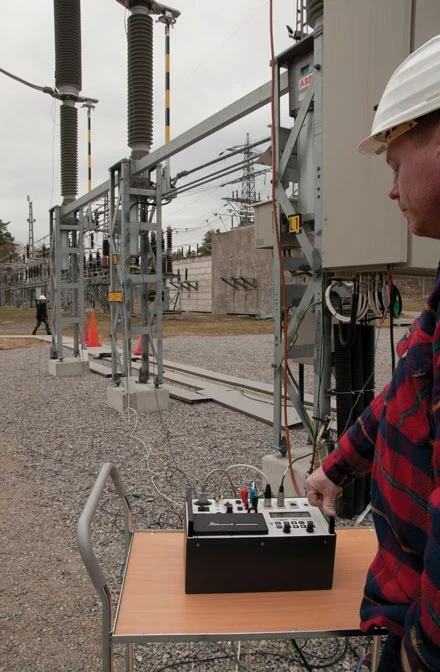
Power Factor Testing of Circuit Breakers
Detecting contamination and deterioration in SF6 breakers to ensure longevity BY LINDA NOWAK, Doble Engineering Company The purpose of “Doble testing”, or power factor testing, SF6 (sulfur hexafluoride) circuit breakers is to detect the presence of contamination and/or deterioration of the...
Storm-Hardened Switchgear
How to protect electrical equipment from Mother Nature BY ROBERT A. MURPHY, Trayer Engineering Corporation The U.S. National Weather Service called Hurricane Sandy the most destructive storm of 2012’s unusually active Atlantic hurricane season. Sandy delivered unprecedented damage across a wide...
Understanding the IEC 61850 Protocol in Substation Automation
The IEC 61850 protocol has become the global standard for substation automation, enabling high-speed communication, interoperability, and streamlined integration of intelligent electronic devices (IEDs). It plays a foundational role in transforming traditional substations into digital substations...
FERC Complaint Targets Duke, PJM Transmission Planning
A coalition of large energy consumers and ratepayer advocates has filed a complaint with the Federal Energy Regulatory Commission (FERC), urging the agency to prohibit transmission owners from independently planning "local" transmission projects exceeding 100 kilovolts (kV). The coalition argues...
Digital Twins for Substations: Bridging the Physical and Digital Worlds
In the rapidly evolving landscape of power grid management, digital twin technology is emerging as a game-changer for substations. By creating virtual replicas of physical assets, digital twins bridge the gap between the physical and digital worlds, enabling enhanced operational efficiency and...
Climate Change Strains Global Electricity Networks: A Wake-Up Call
The increasing frequency and intensity of climate-related disasters are placing unprecedented strain on the world's electricity networks, with severe implications for global energy security. According to a recent Bloomberg report, the effects of climate change are pushing many electricity grids to...
High Voltage Direct Current (HVDC) Substations: Revolutionizing Long-Distance Power Transmission
High Voltage Direct Current (HVDC) technology revolutionizes long-distance power transmission, offering improved efficiency and reliability over traditional alternating current (AC) systems. This article explores the latest developments and applications of HVDC substations, providing a technical...
Cybersecurity in Modern Substations: Protecting the Grid from Emerging Threats
As substations become more interconnected and automated, they are increasingly vulnerable to cyberattacks. These critical nodes of the power grid are essential for ensuring a stable and reliable energy supply, making their protection paramount. Strengthening substation automation controls is key to...